
Filing deadline: December 31, 2027. Claims are reviewed by the Department of Justice in the order received.
Federal RECA program · Downwinder claim help

Families exposed to nuclear fallout may qualify for a $100,000 federal payment.

RECA Justice helps downwinders and surviving family members check eligibility, gather medical and residency proof, prepare the claim file, and coordinate attorney filing with the DOJ.

No upfront cost Survivor claims supported Attorney-reviewed filing Secure document process
$100KPotential tax-free Downwinder compensation
2027December 31 filing deadline
5Primary Downwinder states now in focus
1 fileMedical, residency, identity, and survivor proof organized together

RECA is not a lawsuit. It is a federal compensation program.

For Downwinder claims, eligibility generally turns on three things: where the exposed person lived, when they were physically present there, and whether they were diagnosed with a covered disease.

1. Affected Area

You or your family member lived in an area recognized under RECA's downwind provisions.

2. Qualifying Period

Presence was during the relevant nuclear testing period, including the special New Mexico period beginning September 24, 1944.

3. Covered Diagnosis

A medical record documents a compensable cancer or leukemia recognized by the program.

Idaho · Entire state
New Mexico · Entire state
Utah · Entire state
Arizona · Apache, Coconino, Gila, Mohave, Navajo, Yavapai
Nevada · Eureka, Lander, Lincoln, Nye, White Pine, and covered Clark County townships
Survivor claims · Family members may apply when the exposed person has passed away

Choose a state to see the downwinder geography.

The current RECA downwinder expansion includes three full states and selected counties or townships in two additional states. Final eligibility still depends on dates, diagnosis, and documentation.

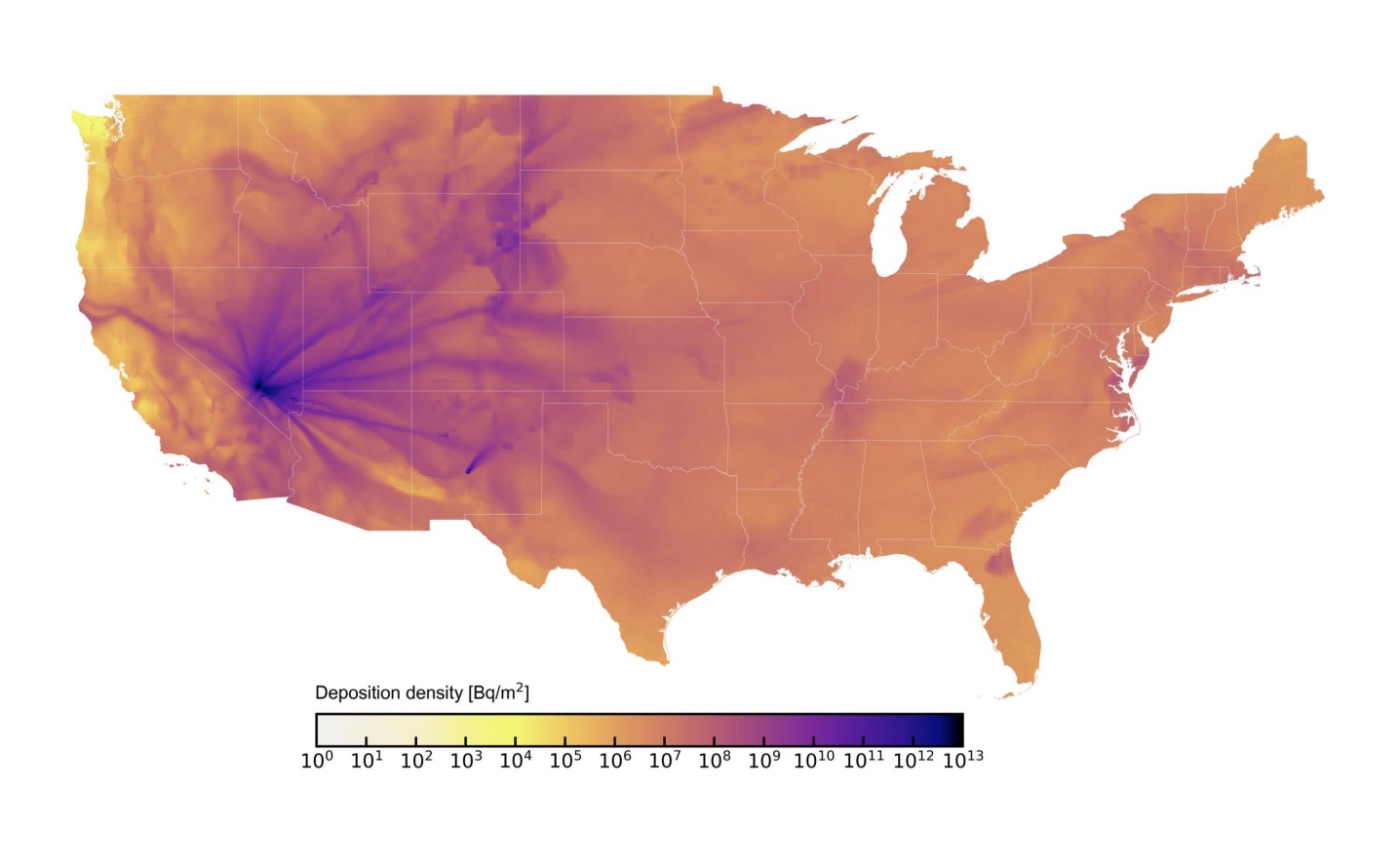
Fallout deposition density map across the United States
Fallout density visualization showing national deposition patterns from atmospheric testing.
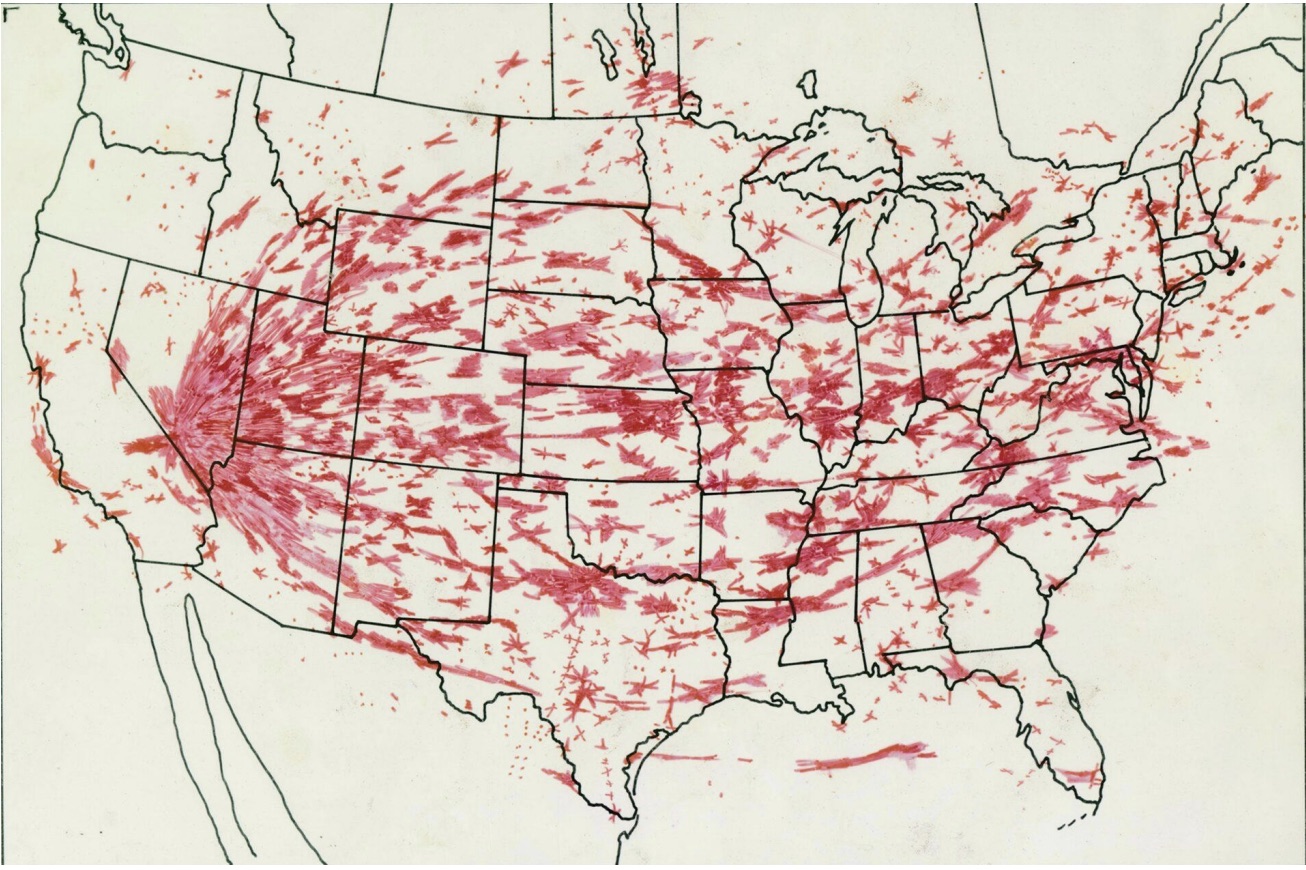
Hand-marked fallout path map across the United States
Historical fallout path illustration used for public education and geographic context.
Utah state flag

Utah Downwinder Claims

Utah is listed as an affected area statewide for downwinder claims.

CoverageEntire state
Presence windowGenerally 1 year from Jan. 21, 1951 to Nov. 6, 1962, or the full June 30-July 31, 1962 period.

Helpful records

  • Old addresses, school records, tax documents, church records, employment records, or family paperwork.
  • Medical records showing a covered cancer or leukemia diagnosis.
  • Survivor documents if a spouse, child, or eligible heir is filing.
Idaho state flag

Idaho Downwinder Claims

Idaho is listed as an affected area statewide for downwinder claims.

CoverageEntire state
Presence windowGenerally 1 year from Jan. 21, 1951 to Nov. 6, 1962, or the full June 30-July 31, 1962 period.

Helpful records

  • Residency proof can include school, employment, tax, military, lease, deed, utility, or family records.
  • Diagnosis documentation should identify the specific cancer or covered condition.
  • Family members may need marriage, birth, death, or heirship documentation.
New Mexico state flag

New Mexico Downwinder Claims

New Mexico is listed as an affected area statewide and has a special earlier qualifying period tied to the first Trinity test.

CoverageEntire state
Presence window1 year from Sept. 24, 1944 to Nov. 6, 1962, according to DOJ downwinder guidance.

Helpful records

  • Because the window starts earlier, older family, school, church, census-style, military, or land records may matter.
  • Medical records should match a covered diagnosis.
  • Survivor claims usually require proof of relationship and death documentation.
Arizona state flag

Arizona Downwinder Claims

Arizona eligibility is county-specific, not statewide.

Covered countiesApache, Coconino, Gila, Mohave, Navajo, and Yavapai.
Presence windowGenerally 1 year from Jan. 21, 1951 to Nov. 6, 1962, or the full June 30-July 31, 1962 period.

Helpful records

  • County-level proof matters, so city, town, school district, or reservation/community records can be important.
  • Medical diagnosis records and identity documents are still required.
  • If the exposed person passed away, survivor documentation becomes part of the claim file.
Nevada state flag

Nevada Downwinder Claims

Nevada eligibility is limited to specific counties and certain Clark County townships.

Covered areasEureka, Lander, Lincoln, Nye, White Pine, and Clark County townships 13 through 16 at ranges 63 through 71.
Presence windowGenerally 1 year from Jan. 21, 1951 to Nov. 6, 1962, or the full June 30-July 31, 1962 period.

Helpful records

  • For Clark County, township/range details may matter, so location proof may need closer review.
  • Residency, diagnosis, identity, and survivor documents should be gathered into one file.
  • When records are incomplete, start with the addresses and family history you already know.

Source: U.S. Department of Justice RECA downwinder affected-area guidance. This website is informational and does not determine final eligibility.

Many internal cancers and blood cancers may qualify.

You do not need to prove that fallout personally caused the cancer in the way a lawsuit would require. The claim file must document the eligible area, period, and diagnosis.

Important: Do not send full medical records through an ordinary website form. Our intake only collects basic screening information; sensitive documents are handled through a secure document workflow.
Leukemia
Lymphoma
Multiple Myeloma
Thyroid
Breast
Lung
Colon
Esophagus
Stomach
Pancreas
Small Intestine
Liver
Gall Bladder
Bile Duct
Bladder
Brain
Ovarian
Rectal
Salivary Gland
Nasal Pharynx

Blood cancers

Leukemia, lymphoma, and multiple myeloma often turn on the exact diagnosis name and the medical record that confirms it.

Internal cancers

Many internal cancers may qualify. The intake call helps match the diagnosis, location, and time period before records are requested.

Not sure yet?

That is common. Start with the illness name you know, and we can help identify what record would confirm the diagnosis.

Keep records private

The website only collects screening details. Medical records should wait for the secure document workflow after intake.

We turn scattered family history into a complete claim package.

Most families need help reconstructing old addresses, dates, medical proof, and beneficiary paperwork. That is the administrative work we handle.

Free eligibility screen

We ask where the exposed person lived, what diagnosis exists, and who would be filing.

Document collection

We help identify residency proof, medical records, identity documents, and survivor documentation.

Attorney filing

A licensed RECA attorney reviews and files the completed claim with the Department of Justice.

What documents usually matter?

Proof of where the exposed person lived during the eligible period
Medical records confirming the covered diagnosis
Government ID and basic claimant information
Death certificate, marriage certificate, birth certificates, or heir documents for survivor claims
Utah desert landscape near Arches National Park

Rooted in the places families remember.

From desert towns and ranch roads to uranium work sites, RECA claims often begin with old addresses, family stories, and records that need to be organized into proof.

Photo: Desert Landscape, katsrcool/Bob Protus, CC BY 2.0.

Focused claims administration for downwinder families.

We are not trying to be a generic directory. The job is to help families move from "I might qualify" to a clean, timely, attorney-reviewed DOJ submission. RECA Justice is backed by Claims Northwest's claims and administrative experience dating back to 2005.

Claims Experience Since 2005

Claims Northwest has worked in claims handling, documentation, and administrative support since 2005, giving this RECA process a practical operations foundation.

No Upfront Fees

We are paid only if the claim is approved, according to the agreement you sign.

Attorney Partner

A licensed attorney serves as attorney of record for filed claims.

Survivor Support

We help spouses, children, and eligible heirs understand what proof may be needed.

Status Updates

We keep the next step visible, from eligibility review to document collection and attorney filing.

Questions families ask before they file.

What is RECA?

The Radiation Exposure Compensation Act is a federal program administered by the Department of Justice for eligible people exposed through nuclear weapons testing or uranium-related work.

Is this a class action or lawsuit?

No. A Downwinder claim is an administrative federal compensation claim. Eligibility is based on statutory requirements, not proving fault in court.

Can family members file if the exposed person died?

Yes, survivor claims may be available. The exact beneficiary path depends on family relationships and documentation.

What if I only know part of the residency history?

Start with what you know. Old addresses can often be supported with school records, employment history, census-style documents, church records, military records, tax documents, or family paperwork.

What does it cost to check eligibility?

The eligibility check is free. There is no upfront fee to start with RECA Justice.

Why file before the deadline?

Claims must be filed by December 31, 2027. Because document collection can take time, waiting until the deadline can create avoidable risk.

Do I have to send medical records today?

No. The website form only asks for basic screening details. Medical documents are handled later through a secure document process.

Find out if your family may qualify.

The first step takes about a minute. Tell us where the exposed person lived, whether there was a covered diagnosis, and how we can reach you.